

Surrealist Canvas Art: Custom Sizes That Fit Your Room
Surrealism canvas art brings the movement’s dreamlike, uncanny imagery onto a wall, giving a room an imaginative focal point that sparks conversation and sets a mood. It ranges from meticulous dream scenes to chance-based collage. Below we cover the main styles, how to choose a piece, canvas and print options, and how to hang it so the strange details land.
TL;DR:
- Choose collage with spontaneous textures for a quiet bedroom or reading corner; sharply detailed dreamscapes create drama in living rooms or entryways.
- Echo room colors for a calm look or use contrast as a focal point, but pair busy imagery with simpler surroundings to avoid visual clutter.
- For fine surrealist detail, choose a matte finish to reduce glare and pigment printing that preserves subtle color shifts in the image.
- Leave a hand’s width around dense pieces, hang near eye level, and use wall anchors or a French cleat for large canvases.
- A tiny figure beneath a huge sky can lose impact if the canvas is shrunk or cropped, so check composition before ordering.
Table of Contents
- What surrealism means when it appears on canvas
- Styles and techniques that shape the mood
- How to choose a surrealist canvas for your room
- Canvas and print options: what to choose and why
- How to hang and arrange surrealist canvases
- Motifs and room ideas to search for
- Why custom sizing matters for surreal art
- Find your surrealist canvas at Sense Canvas
- FAQ
- Sources
What surrealism means when it appears on canvas
Surrealism grew out of André Breton’s 1924 Manifesto of Surrealism and explores the unconscious and dreams. It is more a philosophy than a single look, which is why surrealist canvases can look so different from one another. The Met describes two main practices, and Britannica explains that automatism grew out of Freud’s free association. On a wall, they show up like this:
- Automatism: loose, chance-driven marks, textures and collage that look spontaneous and abstract.
- Illusionistic surrealism: sharply detailed scenes where realistic objects sit in impossible situations.
- Juxtaposition: unrelated things placed side by side, such as a fish in a bedroom.
- Scale shifts: a giant apple in a tiny room, or a tiny figure under a huge sky.
- Symbolic objects: clocks, doors, eyes and clouds that carry meaning without explaining it.
Styles and techniques that shape the mood
Surrealists never settled on one method. Tate notes that techniques ranged from hyper-realistic painting to collage, frottage and grattage.
- Collage and rubbing techniques: Max Ernst invented collage automatism and used frottage and grattage to create chance textures. On canvas, these read as layered, textured, often abstract surfaces.
- Illusionistic dreamscapes: MoMA lists Dalí, Magritte and Ernst among the major Surrealist artists, with themes like desire, dream imagery and irrational juxtaposition. Their crisp, believable detail makes the impossible feel real.
Style sets tone. Textured automatic work tends to feel quiet and meditative, so it suits bedrooms and reading corners. A hyper-detailed dreamscape is more dramatic and confrontational, and it holds a living room or entryway.
Surrealism is a movement defined by exploring the unconscious, not by one visual style. That is why a calm collage and a razor-sharp dream scene can both count as surrealist (Tate).
How to choose a surrealist canvas for your room
Treat the choice as a few quick decisions.
- Pick the role. One large canvas centered at eye level works as a statement. In a narrow hallway, a series of smaller canvases can tell a story across the wall.
- Match or contrast the palette. Echo your dominant room colors for a calm look, or choose a high-contrast piece to make it the focal point. For help, see our guide to abstract art color combinations.
- Judge visual density. Busy, detailed imagery needs simpler surroundings so the room does not feel cluttered.
- Think about mood. Surreal imagery shifts how a space feels, from playful to unsettling, so imagine spending time in the room with it.
- Search smartly. Try phrases like “dreamscape canvas,” “surreal collage print” and “illusionistic surreal canvas.”
Short on wall space? Our post on canvas art for small spaces covers scale in tight rooms.
Pro Tip: Hold a sheet of paper cut to the canvas size against the wall for a day before you buy.

Canvas and print options: what to choose and why
The product format changes how a surreal image looks and lasts.
- Stretched canvas: fabric pulled tight over a wooden frame, ready to hang on its own.
- Gallery wrap: the image continues around the edges, so no frame is needed and the piece looks clean from the side.
- Framed canvas: adds a border that suits traditional or formal rooms and can tame a wild image.
- Finish: matte reduces glare for fine detail, while a slight sheen can deepen color.
- Print quality: surrealist work relies on tiny details and subtle color shifts, so high-fidelity pigment printing matters more than it would for a simple graphic.
- Tradeoffs: thicker, better-finished canvases usually cost more but resist sagging and fading.
If your walls are freshly painted, the paint sheen matters too. This guide to paint finishes for each room explains how finish choices affect the surface you hang on.
How to hang and arrange surrealist canvases
- Center at eye level. For large pieces, aim to place the middle of the canvas around eye level.
- Leave breathing room. Keep about a hand’s width of clear wall on every side of a dense, detailed piece so the imagery can breathe.
- Choose single or series. One bold canvas suits an open wall. Several smaller ones with even gaps create a narrative flow in narrow spaces.
- Use proper hardware. Heavy or large canvases need wall anchors or a French cleat, not a single nail.
- Protect the surface. Dust gently and keep canvases out of direct sun to preserve color.
Pro Tip: Lay your arrangement on the floor first and trace each canvas on paper, so you can tape the shapes to the wall before drilling.
Motifs and room ideas to search for
Knowing the common motifs helps you search or write a commission brief.
- Dream landscapes: melting horizons and endless skies. Search “surreal dreamscape canvas.”
- Floating objects: rocks, doors or fruit hovering in space. Search “levitating objects surreal art.”
- Altered scale: oversized flowers or tiny people. Search “giant scale surreal painting.”
- Hybrid creatures: animals blended with humans or machines. Search “hybrid creature surreal canvas.”
- Surreal portraits: faces with missing, doubled or transformed features. Search “surreal portrait wall art.”
Room prompts: a dramatic dreamscape suits a living room, a calm collage fits a bedroom, and a provocative portrait gives an office some edge. Our bedroom wall art guide has sizing tips for sleeping spaces, and our psychedelic alien canvas shows how trippy, surreal motifs look on a finished print.
Why custom sizing matters for surreal art
Surreal images depend on scale. A tiny figure under a huge sky loses its drama if the canvas is cropped or shrunk badly. That is why we let you tailor size and composition, so the focal points stay where the artist intended. Our canvas helps carry fine detail and color faithfully. You browse a collection, choose a size and finish, and order.
— Sense
Find your surrealist canvas at Sense Canvas
We offer customizable canvas wall art in multiple sizes. Current prices are on our website. Start by browsing our abstract and trippy collections on Sense Canvas, where you can pick a size and place your order. Every design is exclusive to us, and free global shipping comes with each order.
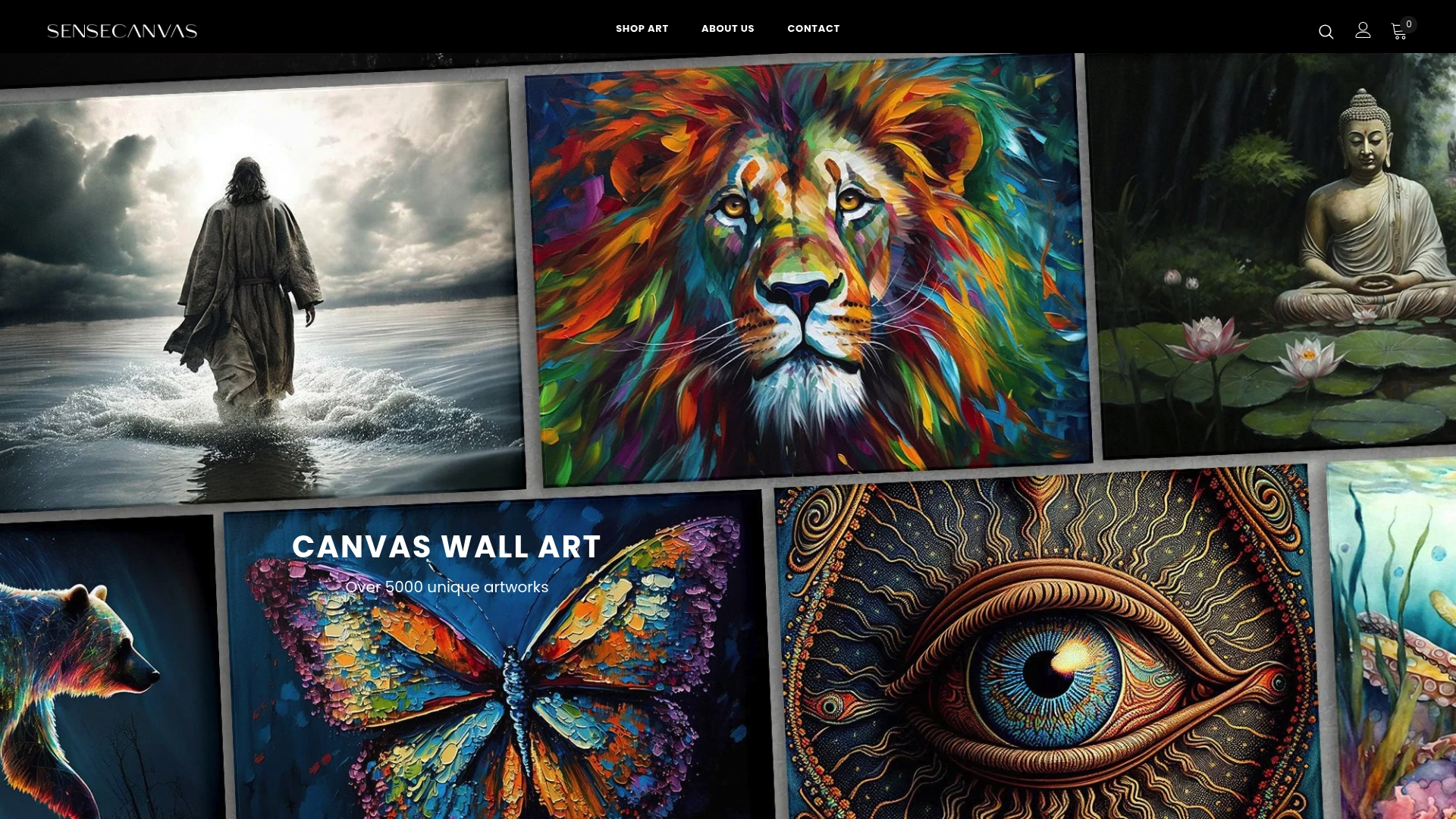
Ready to bring a dream onto your wall? Shop our canvas collections now and choose the size that fits your room.
FAQ
What are the main characteristics of Surrealist art?
Surrealist art explores dreams, the unconscious and the irrational rather than everyday reality. Tate describes it as championing the poetic and the uncanny. Common traits include unexpected juxtapositions, symbolic objects and shifts in scale.
Which artists are most associated with Surrealism?
MoMA’s Surrealism entry names Salvador Dalí, René Magritte and Max Ernst among the major Surrealist artists. Their work shows themes like desire, dream imagery and irrational juxtaposition.
What are the two types of Surrealist art?
The Met describes two main practices: visual automatism and illusionistic Surrealism. Automatism uses automatic drawing or painting that bypasses conscious control. Illusionistic work depicts dream worlds in realistic detail.
What is automatism in Surrealist art?
Automatism means creating art without conscious control. Britannica notes it was inspired by Freud’s free association and used to reach unconscious material.


